
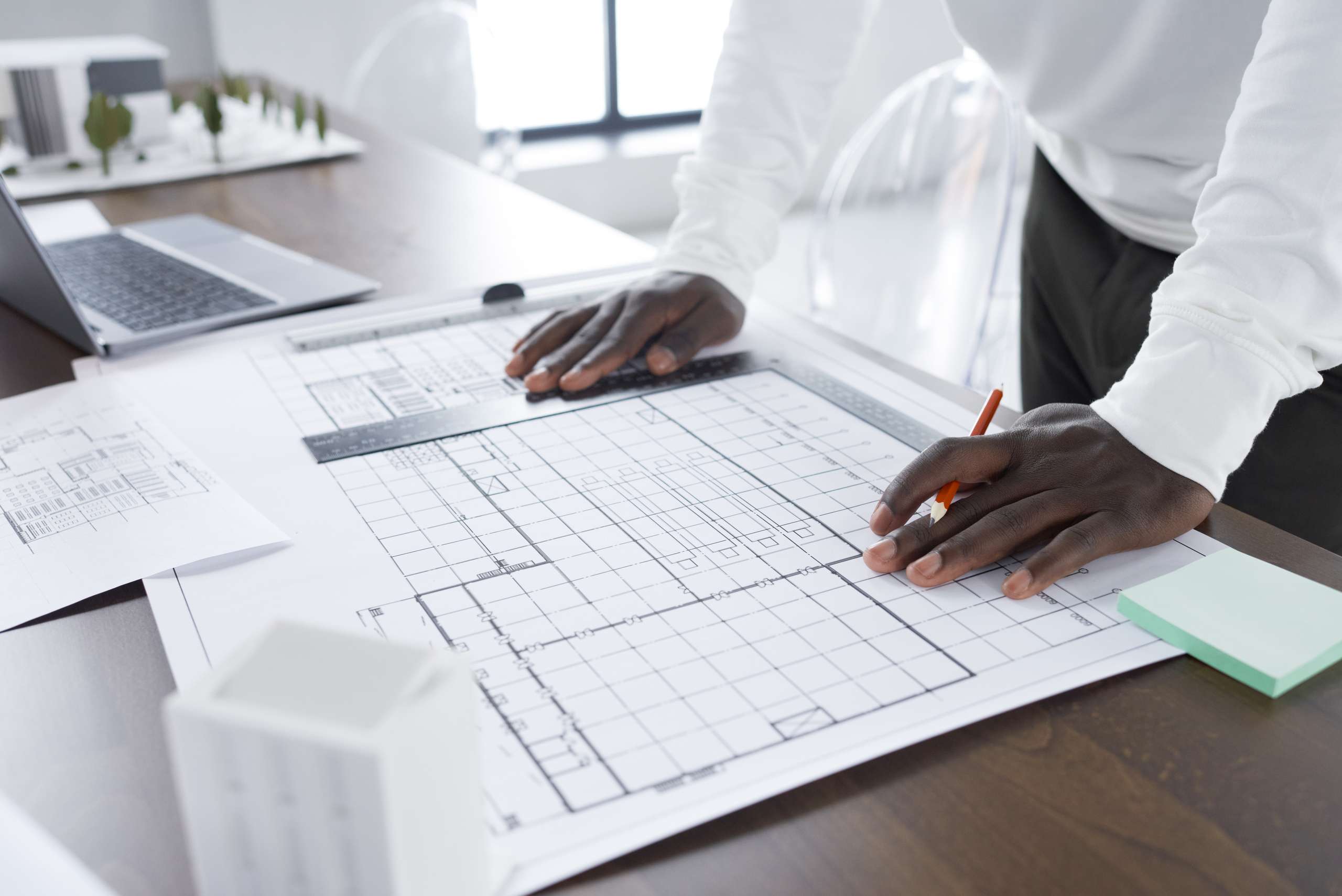
How to Start Practicing Architectural Sketching Without Freezing Up
When you’re new to sketching architecture, the page can be a daunting place. You’re afraid to make a mistake. You worry about proportions. You try to draw buildings. And the drawings suck. At least, mine did. I think I know why. When you try to draw a building, you’re really trying to draw a picture of a building. You’re trying to create a finished piece of art. And you’re not good enough yet. So you fail. Instead, start by sketching space and mass. Don’t worry so much about the details. Start with simple objects and see them as blocks, cylinders, etc.
Fill a page with three household items (say a book, a box and a coffee mug). But instead of drawing them as a book, a box and a coffee mug, draw them as blocks and cylinders. Don’t draw the cover or the pattern on the mug. Just see the overall shape. And draw the space in between them, just as carefully as you draw the objects. Another exercise is to draw a single chair, but start with its overall mass. Don’t worry about the arm rests or the legs. Draw the mass first.
Then you can add those details in. We often get caught up in trying to sketch all the details first. We want to sketch the mullions between the panes, the railing on the balcony, the texture of the wall, and the tiny little cars driving by. But you can’t draw all of those little things without sketching the big things first. When you try, you end up with an out-of-proportion mess. So focus on the big things. Start by just sketching the proportions of the building.
Don’t draw any details. Don’t worry about any of that stuff. Just get the proportions right. If you’re really struggling to get proportions down, start by measuring. Take your pencil, and hold it up to the building in front of you. Use it to measure the relative height of the windows to the height of the wall. See how tall the wall is compared to the door. Just take a few measurements and see how it comes out. Then try to draw the building using those proportions. What I do is take a piece of trace and start sketching. I don’t worry too much about the proportions at first.
Then, once I’ve got a vague outline, I take a step back and evaluate. Are the windows too high? Is the door too tall? Are the walls the right proportions? You can usually make those kind of proportion judgments pretty easily, so fix them on your sketch. Then move on to the next thing. If you’re still struggling to get the proportions, try breaking it down further. Instead of sketching the entire building, try sketching just one corner. Instead of trying to sketch the entire door, try sketching just the door handle. If you’re trying to draw a stair, don’t try to draw the entire stair.
Just draw one step, or one newel post. Sometimes, we get caught up in the need to sketch the entire scene, and we just freeze. Instead of trying to sketch the whole thing, focus on just one piece of it. Then come back later and draw the rest. Sometimes, doing several quick studies can be helpful. Try drawing the door three times, each time faster than the last. Try drawing it once with only straight lines. Try drawing it once with only shadows. Using constraints like that can help loosen you up. It can help you focus on just one aspect of the drawing, instead of trying to do everything at once. While you’re doing those quick studies, take a moment to reflect on what you were trying to accomplish.